TL;DR
- Homeownership is essential; leased systems are not owned by the homeowner.
- Roof condition and angle influence solar panel installation feasibility.
- Energy consumption history helps estimate potential savings.
Understanding if your home qualifies for solar energy in Florida involves several key factors, including the roof type, energy bills, and ownership structure such as solar leases. Below, we’ll explore each of these aspects to help you understand your eligibility.
What Roof Characteristics Are Needed for Solar Panel Installation?
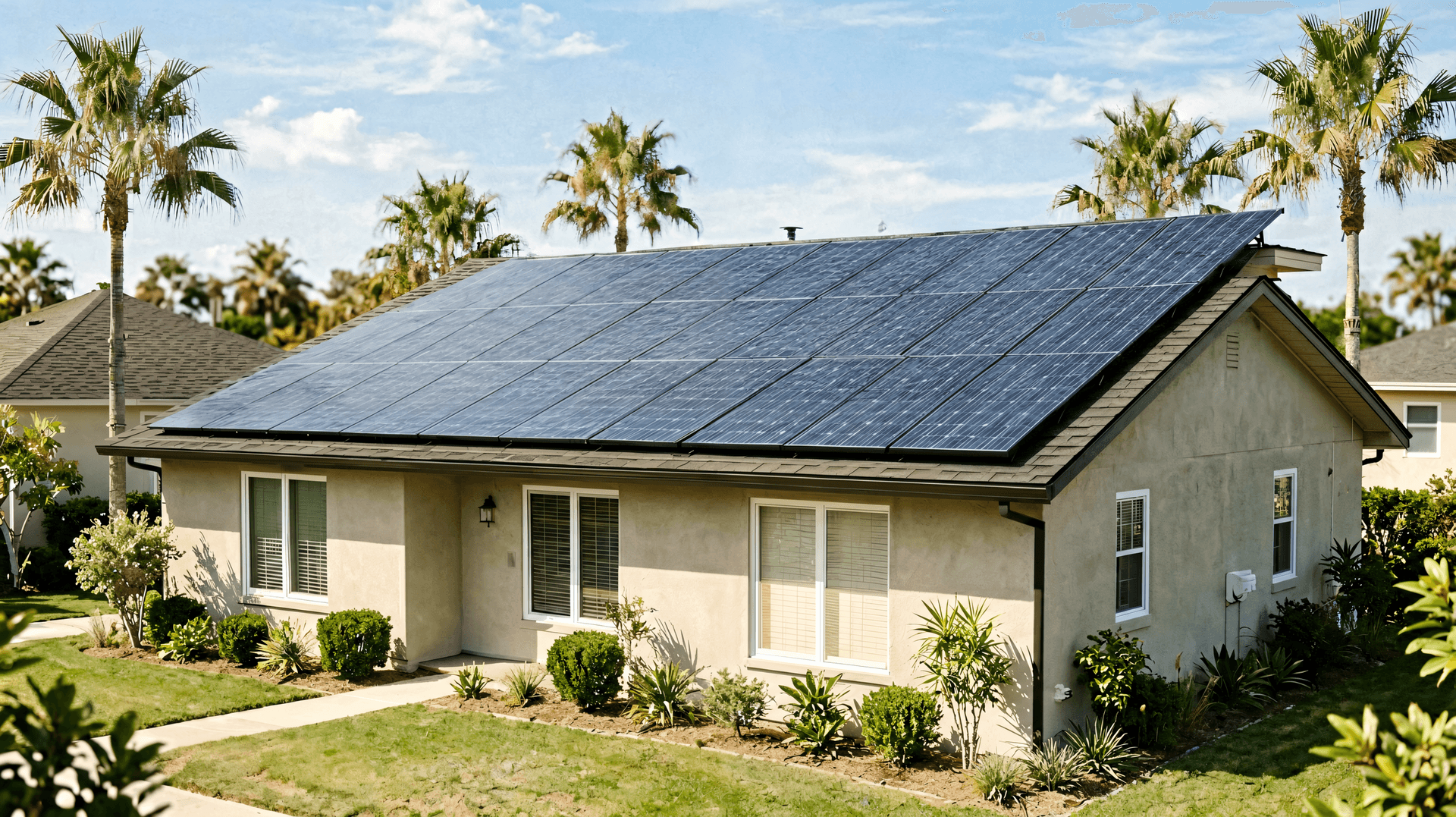
Most Florida homes can qualify for solar panels if they meet specific roof characteristics. Adequate roof space and orientation play significant roles in the efficiency of a photovoltaic system.
Typically, your roof should:
- Be relatively new: Ideally, your roof should be less than 10-15 years old to withstand the solar panels' weight and installation process.
- Have an appropriate angle: South-facing roofs are optimal, but panels can still be installed on roofs with other orientations, just with slightly less efficiency.
- Be structurally sound: The roof should be in good condition, without needing repair or replacement in the near future.
Comparison Table of Roof Types and Solar Viability
| Roof Type | Suitability for Solar Panels | Notes |
|---|---|---|
| Flat Roof | Moderate | Requires tilt to maximize sun |
| Pitched Roof | High | Ideal for most installations |
| Tile Roof | Moderate | Custom mounts might be necessary |
| Shingle Roof | High | Common choice, easy to install |
| Metal Roof | High | Usually requires special mounting |
A roof inspection by a qualified professional can determine structural soundness and help you make an informed decision.
How Do My Energy Bills Impact Solar Eligibility?
Your energy bills can provide insights into your household's energy usage, which is crucial for estimating potential savings with a solar lease. Higher energy consumption often correlates with a higher capacity for solar benefits.
- Track your usage: Review your past utility bills. A consistent higher monthly bill indicates more room for solar energy to make a positive difference.
- Seasonal fluctuations: Be aware that Florida's warm climate may lead to spikes in electricity costs during summer months due to greater air conditioning use.
Average monthly usage reports can help evaluate if your current energy consumption aligns with the capacity of a photovoltaic system. This evaluation will assist lenders and installers in determining the applicability of a solar lease.
What Does Ownership Mean in Terms of Solar Leases?
When homeowners opt for a solar lease in Florida, they do not own the photovoltaic system. Instead, a third-party company retains ownership of the solar panels, and the homeowner pays a monthly lease fee.
This structure has its pros and cons:
Pros:
- Limited upfront costs: Commonly offered with $0 down.
- Maintenance is typically handled by the leasing company.
Cons:
- No federal tax incentives or rebates accrued by the homeowner.
- The system may not significantly reduce every component of the electric bill, depending on utility company charges (like those from Florida Power & Light).
How Do Incentives like PACE Impact Solar Eligibility?
Homeowners in Florida may also consider incentives such as PACE (Property Assessed Clean Energy) financing when applying for solar installation. This allows you to pay for solar improvements through property assessments on your tax bill.
- Increased affordability: PACE can enable more homeowners to afford solar systems, though it is primarily for owned systems as opposed to leased.
- Eligibility considerations: Participate in programs and check if your home qualifies based on the location and property assessments.
Conclusion
In summary, determining whether your Florida home qualifies for solar involves evaluating roof quality, energy consumption, and understanding the ownership model of a solar lease. Each of these factors can influence solar panel efficiency and overall cost-savings potential.
If you're considering solar and want to check your home's eligibility without any impact, feel free to reach out and discuss your options with one of our specialists at Carpediem Improvements, LLC.